Main Content RSS FeedFeature Article

The Thousand Autumns of Gene Smith »

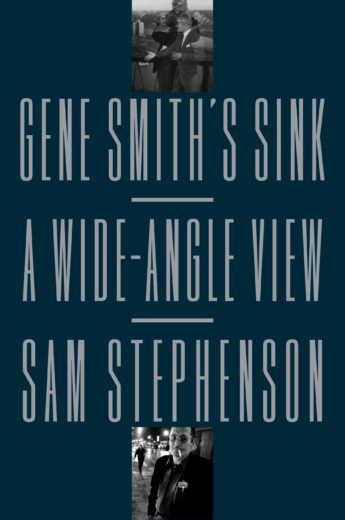
Next March I’m heading to Japan and the Pacific to research Gene Smith’s work during WWII and the time he spent documenting Hitachi (1961-62) and Minamata (1971-74).  Iwo Jima is opened to civilians only one day per year and the next time will be March 16 so I’m planning around that.

In preparation for that trip I’m reading David Mitchell’s new novel, The Thousand Autumns of Jacob de Zoet, which concerns a young man from Holland who seeks his fortune in a vibrant Japanese port city in 1799.

There is a fascinating interview with Mitchell by Adam Begley in the current Paris Review in which Mitchell talks about a Westerner’s first visit to the East.  He says:  ”(Joseph Conrad’s) story ‘Youth’ has this beautiful passage about your first landfall in Asia and how it haunts you for the rest of your life – how everything is downhill afterward.  There’s something like that in the end of Thousand Autumns. We all romanticize our youth, but when East Asia is intertwined with youth, the wistfulness and the sense of loss are amplified – for reasons which Edward Said might have scorned, and who knows, maybe justifiably.  But Conrad wasn’t lying about what he felt, and neither am I, so perhaps we just have to take the flak.”

Gene Smith was haunted for the rest of his life by Japan and the Pacific.  He was twenty-four, only seven years removed from his father’s suicide and his high school graduation in Wichita, Kansas, when he went to Asia for the first time to photograph the War.  Smith’s second wife, Japanese-American, Aileen Mioko Smith, told me recently that Gene felt like he had been from Japan in a former life.

One good, well-meaning writer friend urged me to not waste my time and money on this expensive trip to follow Smith’s footsteps in Asia.  He said that Smith’s photographs told the essential story.  Another friend and supporter told me, “If you and Laurie (my wife) want to go to Paris for two weeks, I’ll give you the money, but going to Iwo Jima, Okinawa and all those places is going off your rocker.”

If somebody wants to argue that I should move on to another topic (Joseph Mitchell, David Mitchell, Sonny Clark, Sonny Bono, Bono, anything ) after logging nearly fourteen years researching Smith’s life and work to date, then I might listen.  Eight months ago, in the early days of Jazz Loft Project post-partum, I might have volunteered that view myself.  But I’m committed to telling a good story about Smith and this trip is obligatory.  My wife and editor agree and that’s really all that matters.

After reading Mitchell’s interview I went to the used book store in Chapel Hill and picked up The Portable Conrad, which contains “Youth.”  In the book’s Introduction Morton Dauwen Zabel quotes Fitzgerald:  ”So many writers, Conrad for instance, have been aided by being brought up in a metier utterly unrelated to literature.  It gives an abundance of material and, more important, an attitude from which to view the world.  So much writing nowadays suffers both from lack of an attitude and from sheer lack of any material, save what is accumulated in a purely social life.”

There’s no date on Fitzgerald’s quote but he died in 1940.  If he were still around he might like a comment made by Dave Hickey last year.  Hickey said there are three kinds of novels by writers who teach:  1) Novels about what they did in their youths.  2) Academic novels.  3) “Sabbatical” novels about lonely people traveling the world.

“Youth” is an interesting story.  It runs forty pages in this edition.  It opens in the voice of a first person narrator, then there are thirty-eight pages of continuous quotation from the narrator’s comrade, Marlow, the same Marlow from Heart of Darkness, who tells this story of the sea-going visit to Asia twenty years earlier.  Then the narrator returns at the end.  I’m reminded that the structure of “Youth” is not unlike Heart of Darkness, using long quotations to tell the story.  It is also similar to the narrative structure used by Joseph Mitchell and Whitney Balliett in their non-fiction pieces in the New Yorker, which I wrote about here.  It’s a structure that may have been thwarted by the advent of the portable tape recorder which made verbatim transcripts possible and, maybe falsely, ideal.

Main Content RSS FeedRecent Articles

Celebrities Don’t Dig Jazz »

Here’s my new JLP blog entry about my experience trolling the iTunes Celebrity Playlists this week in Boston.

Conrad Yeatis Clark, First Grade »

See my new blog entry on the Jazz Loft Project site about pianist Sonny Clark including a photograph of his first grade class in Herminie No. 2, PA, 1937-38.  When I’m done with my Gene Smith biography I’ll write something extensive on Clark.

When You Wish Upon a Star »

Last night I went to Flyleaf Books in Chapel Hill to hear Rosecrans Baldwin read from and talk about his new novel, You Lost Me There. I ran into our friends Philip and Linda Carl there.  Philip, a molecular biologist, immediately began talking about one of Gene Smith’s photographs from the 1955-57 Pittsburgh series.

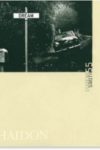
The photo depicts a young woman alone on a sidewalk at night, dressed in a skirt and sweater with sleeves rolled up, leaning on a parking meter.  I know it is the Shadyside neighborhood from other photographs I’ve seen from that night. The young woman looks forlorn, belying the festive ribbons hanging over the street.  Something hadn’t worked out the way she hoped.  In the background there is a Texaco station.

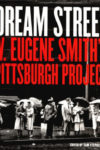
The photograph was published in my Spring 1998 DoubleTake magazine piece, “W. Eugene Smith’s Unfinished Symphony,” and it was in my 2001 book, Dream Street. It was also the cover image on Brad Leithauser’s 1998 book of poems, The Odd Last Thing She Did.

Philip said to me, “That’s the most lonely feeling photograph I’ve ever seen in my life.  It’s devasting,” he seemed moved as he was talking.  He was shaking his head, “That Texaco sign in the background…gosh, that is one hell of a photograph.”

What about that Texaco sign, I asked.  He said, “You know the song, ‘When you Wish Upon a Star’…”

I’ve been looking at that photograph closely for nearly fourteen years – it’s one of the few photographs in Dream Street or The Jazz Loft Project that we laid out by itself on a right hand page with a blank white page facing it – and that tune had never occurred to me.  But now that Philip mentioned it I don’t have any doubt it’s what Smith was thinking.  Written for Walt Disney’s Pinocchio in 1940, the tune was used in the opening for the Disney TV series that premiered in 1954.  It was an icon for a country emerging out of the Depression and WWII, before Vietnam and all the political assassinations.

We wish upon all kinds of stars, Smith thought, including gasoline companies in a culture then increasingly dependent on machines.  It’s the kind of pun, or modern mythology, that he went after in Pittsburgh; “equilibriums of paradox,” he called it.  It makes me wonder if Smith posed the picture.  Maybe he didn’t.  It doesn’t really matter.  But I wonder if that woman is still alive.  I’d like to ask her.

The New Face of Jazz »

See my new post on the JLP blog, Chaos Manor.

Chicago Weekend Recap »

See my latest JLP blog entry about the exhibition opening in Chicago.

The Every Day Quarterly »

My second blog post from my recent New Mexico trip is here.  I mention an idea I keep having for a new literary-documentary-media magazine or journal.  I know it seems preposterous in this anxious media age.  I’d want the production to maximize the possibilities digitally, foreseeing all the potential of the iPad and other digital readers.  As a periodical hound, the idea of subscribing to something and having it automatically dumped on a digital reader every period, rather than having them delivered by mail truck, excites me.  You don’t stack piles in your house before inevitably and regrettably throwing them out.  Plus, you could have a search function that sifted through all of your personal archive.

The periodical I have in mind would include videos and music, photography,  interviews, fiction, poetry, and traditional long form literary journalism that could be printed and read without looking at a screen, if desired.

One reason this idea keeps popping into my head is that after thirteen plus years of JLP I’ve got a mountain of unused material and leads.  I can’t possibly use all of it.  For example, I’d like to hire somebody to research the jazz scene on Staten Island in the 1950’s.  From the nearly 400 JLP interviews we’ve got some great stories about that scene already.  It was a scene for those who couldn’t make it in Manhattan for some reason (there was a trumpet player who was paraplegic), or who were waiting for their musician union cards.  There were lots of Mob overlaps, Mob-owned dives.  Also, we’ve heard stories about other far flung joints where drug convicted musicians like Sonny Clark could play without a cabaret card, and associated hotels.  I would love to write these stories myself.  But how many projects can I do?  That’s just one example.  I’ve got about a hundred and thirty-seven more.

Don’t ask me how this journal would get financed.  There’s got to be a way to make it good enough so people would subscribe and then we could draw advertising.

The Every Day Review.  Or the Every Day Journal (too clinical).  Or, Every Day Magazine.

We’d deliver the most significant content on a scheduled periodical basis, not every day.  People must wait for the ultimate payoff.  The site will be updated daily with blog entries, calendar notices, and news links.  But the major, long form material would be delivered on a periodical basis, subscription-only.  The heavyweight stuff isn’t free.

So maybe it’s called The Every Day Quarterly (or Monthy or Weekly).

Surely there are some smart people out there way ahead of me on this.  But, then, I still need a place to expunge leftover content.

Report from New Mexico »

See my new Jazz Loft Project blog entry regarding my New Mexico trip this weekend.  Of particular note is the part concerning one of the most famous WWII photos made by Smith.  Under what circumstances could some negatives by a different photographer come into Smith’s possession?  Under what circumstances could Smith not be sure if the negatives were his?  Or, said differently, under what circumstances would he come into possession of somebody else’s WWII negatives and believe the might be his?

“An Entirely Different Animal” »

Here is my new blog entry on the JLP page.

Newport 1956 »

Here is my newest blog entry on the Jazz Loft Project page.  The article I intended to publish about Branford Marsalis never got done, to my regret.  There is a great story there.  In my view his music is state of the art today, and he’s a celebrity, but he operates in a weird kind of oblivion.  The people who would like his music the most aren’t hearing it.  If you put his quartet in the alt-rock club Cat’s Cradle in Carrboro, N.C. the joint would explode.  But in a fine, cultured establishment where people are paying $50 nobody wants to hear “Jack Baker” or “Blakzilla.”  It’s a conundrum faced by all of jazz but Branford is the epitome.  A decade or so ago he moved down to Durham, N.C.  The local media assumed he was taking over the jazz director’s job from Paul Jeffrey at Duke.  But that wasn’t it.  He just wanted to get out of New York and L.A. where he’d lived for twenty years.  He’s now taking half the money and teaching at N.C. Central, the local historically black university.